
- Fiona Murdoch
- 18 September, 2026
- 3:26 pm
- 0 comments
Looking for Loopers in the Archives
Since 2021, the Mallee Looper has become superabundant across mallee woodlands in South Australia, Victoria, and New South Wales. The native caterpillar belongs to a moth in the Geometridae family and can defoliate mallee Eucalypt woodlands over hundreds of thousands of hectares.
A local field naturalist told me he'd seen something similar back in the 1960s — which had me wondering: has an outbreak like this occurred before? Although I found nothing in the scientific literature, the old newspapers held in the Trove archive gave some strong clues. We can't be sure it's the same species, but historical newspaper articles (which are wonderfully colourful) describe a very similar phenomenon to what we're currently observing.
The earliest record I could find is from 1902: “For miles in the Victorian desert the mallee was found to be almost entirely denuded of leaves by an active and voracious grub ... The effect was to give the country a brown tinge, and in many places the mallee was dead.” With similar notes from 1904: “A wiry, wooden-looking grub, which has the appearance of a small mallee twig, is stripping thousands of acres of mallee scrub of all the leaves”.
The “grub” or “looper” appeared again in 1913: “the country is in possession of the looper caterpillar. The mallee was alive with them, their colour simulating what they were on”. The camouflage theme is also repeated in later articles. Whole tracts of mallee were described as “bare as if a bush fire had passed that way”.
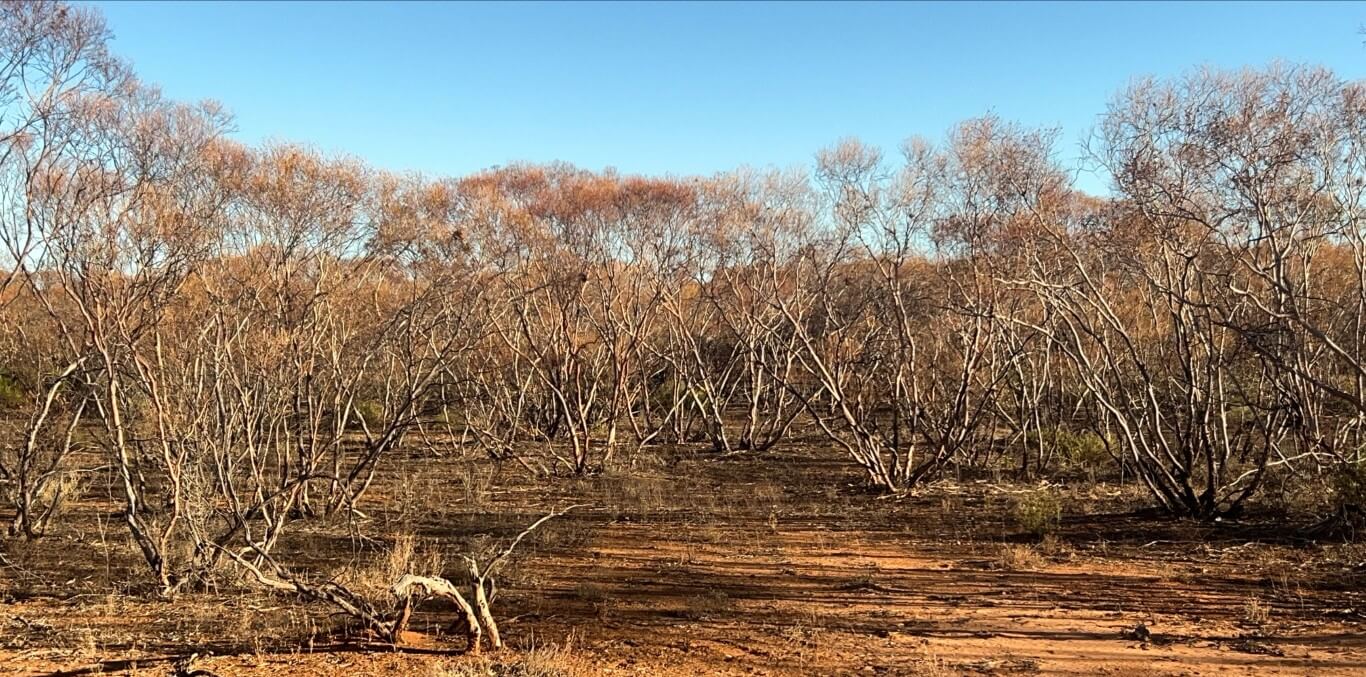
Figure 1 1913: Whole tracts of mallee were described as “bare as if a bush fire had passed that way”
This is the same comparison used during a 1931 outbreak, when “millions of the grubs are to be seen, and the invasion extends [from Victoria] across the river into New South Wales”. Several reports described the mallee woodlands “appeared as if they had been swept by fire” or “damaged by fire”. Descriptions of the pattern of defoliation are another common thread: “The grub lives on the leaves of the mallee and is doing immense damage to young shoots and the tender parts of the scrub.”
My favourite line of all comes from 1937, when a “plague of grubs … literally in millions … of a sickly green color” that would “wave their heads about like a savage snake about to strike” whenever anyone came near — every leaf on every tree apparently topped with its own tiny, furious serpent.
These historical records suggest there may have been several previous outbreaks of the Mallee Looper caterpillar (Arhodia sp.). This is useful information to help us understand the current outbreak.
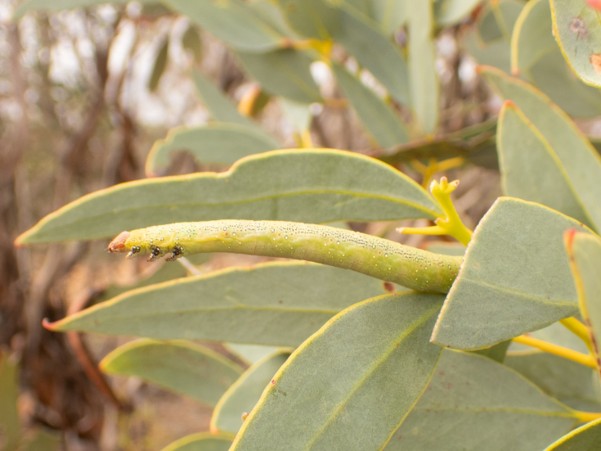
Figure 2 1937: “A plague of grubs … of a sickly green color” that would “wave their heads about like a savage snake about to strike”
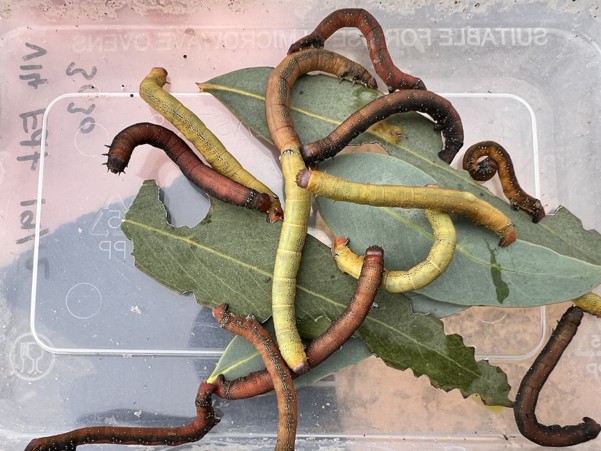
Figure 3 1931: “On the trees in the Mallee this year are hundreds of looper caterpillars eating the young leaves. They change colour as they go on to a different-coloured branch.”
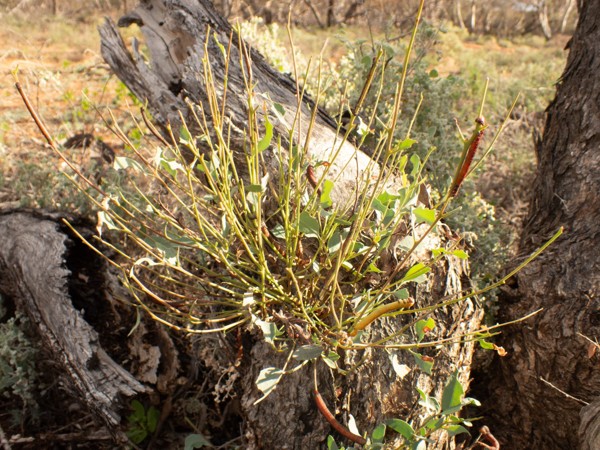
Figure 4 1931: “The grub lives on the leaves of the mallee and is doing immense damage to young shoots and the tender parts of the scrub.”
This project of the Regional Drought Resilience Planning program is jointly funded through the Australian Government’s Future Drought Fund, the Victorian Government and the Natural Resources Conservation Trust.